Why a $150 PPI saves thousands
Once you sign the title, every problem is yours. A pre-purchase inspection is the cheapest insurance available against buying someone else's deferred maintenance, hidden accident damage, or impending major repair. The customer who skipped the PPI on a 2015 luxury SUV last year and called us the following week with a $4,200 transmission quote is the customer who taught us to write this article.
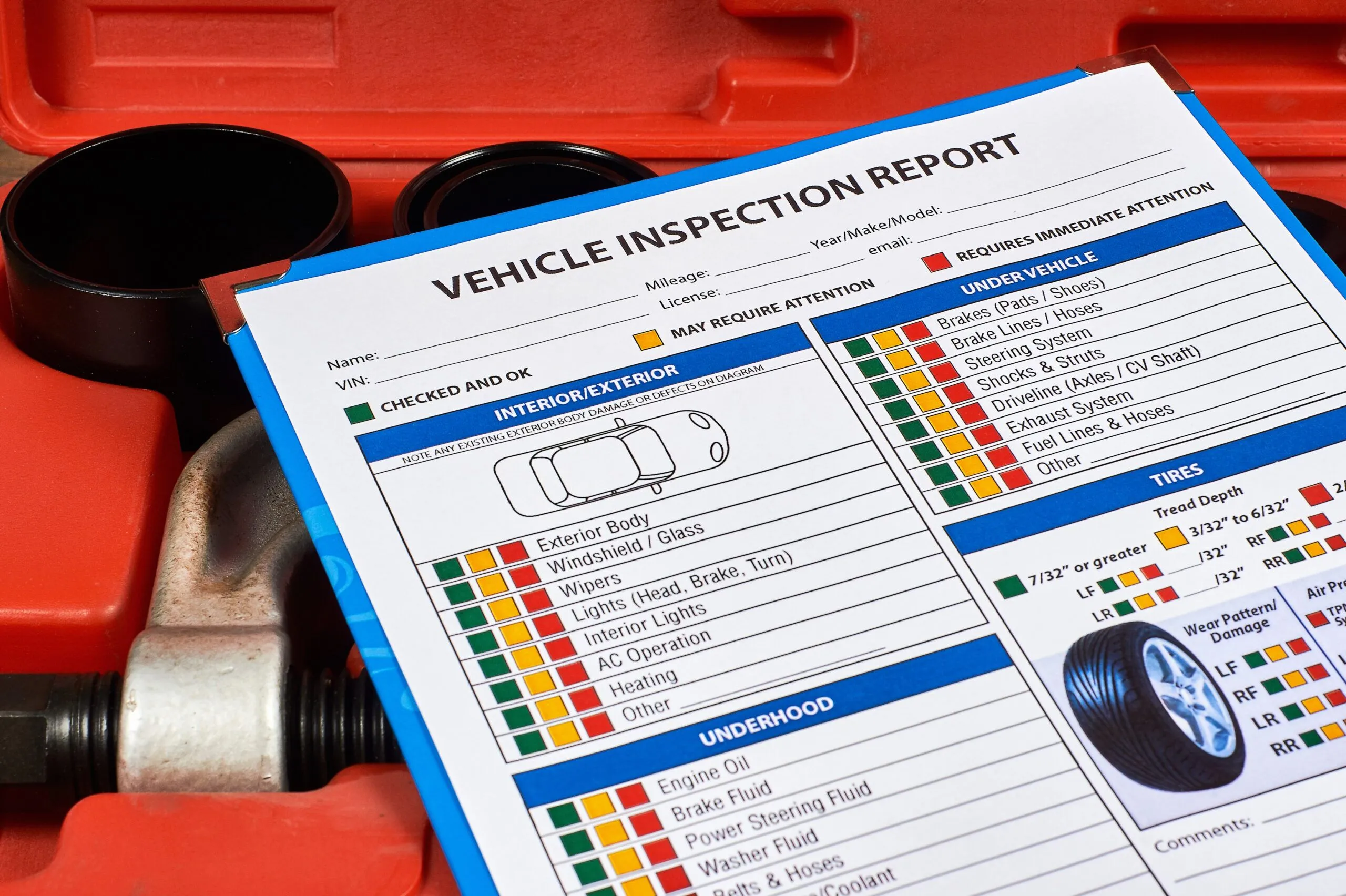
The 30-point inspection we run
Engine and drivetrain
- Cold start observation (smoke, knock, rough idle)
- Visual inspection of hoses, belts, gaskets
- Oil condition and level (sludge, water contamination)
- Coolant condition (oil contamination indicates head gasket issues)
- Transmission fluid color and smell (dark or burnt = trouble)
- Compression test on suspect engines
- Live data scan of all modules
Brakes and suspension
- Pad thickness, rotor wear, fluid condition
- Caliper, hose, line inspection
- Strut, shock, bushing condition
- Steering rack play, tie rod ends, ball joints
- Wheel bearing noise on a road test
Body, frame, and structural
- Frame and unibody inspection for collision repair signs
- Paint thickness gauge readings on body panels
- Door, hood, trunk gap consistency (mismatched panels = repaired collision)
- Underbody rust, especially on older trucks
- Flood-vehicle check (waterlines on interior, sand in unusual places)
Tires, electrical, and HVAC
- Tire tread depth, age (DOT date), wear pattern
- Battery age and charging system test
- Every interior and exterior light
- AC performance test (cold air on max, both vent positions)
- Heater function
Documentation review
- Carfax / AutoCheck history
- Service records, if available
- VIN match across plate, engine bay, dashboard
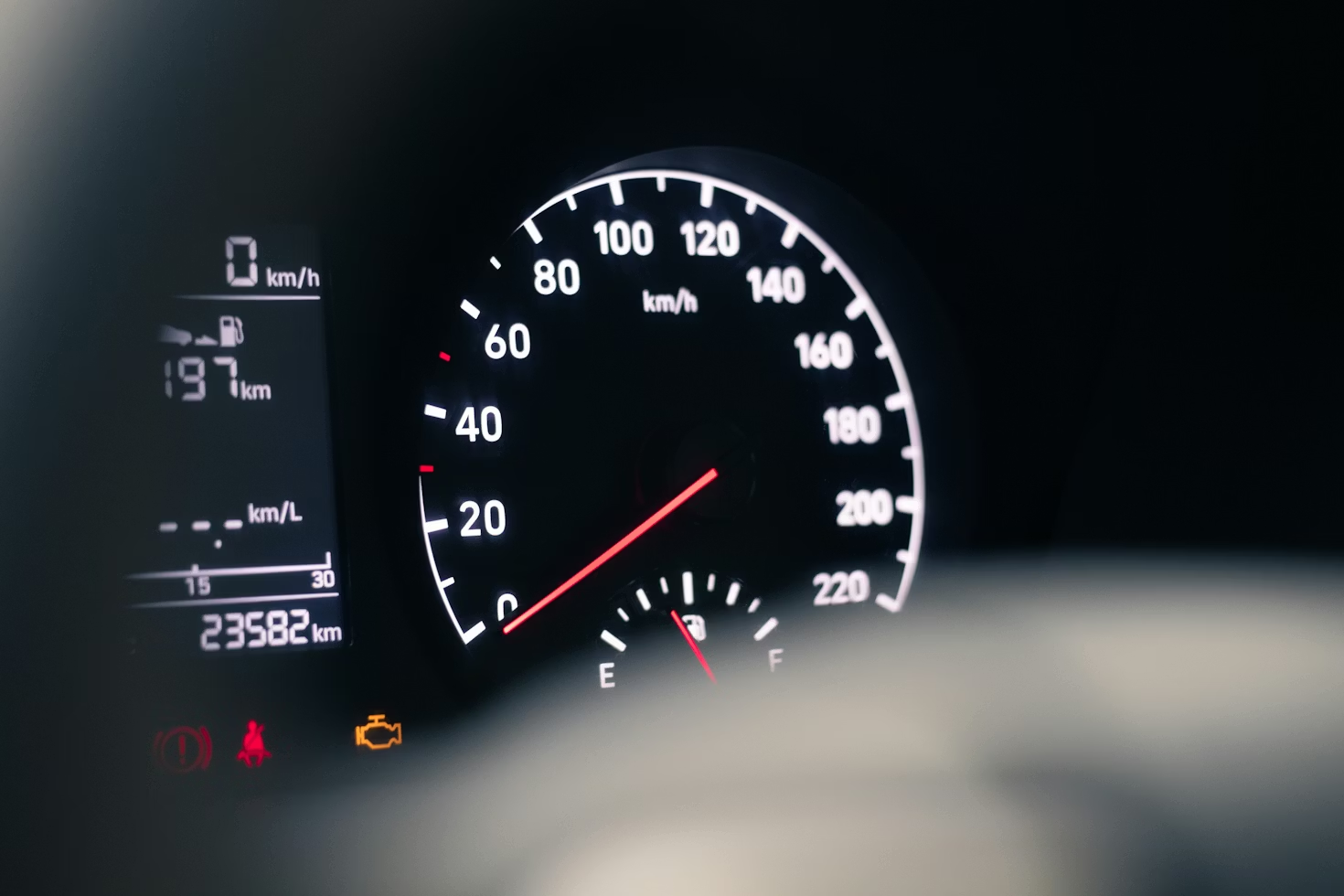
- Odometer plausibility (cluster discrepancy is a major red flag)
- Title check for prior salvage or rebuilt status
Red flags that mean walk away
- Cluster discrepancy (odometer reading does not match wear and service records)
- Frame straightening evidence (poorly aligned welds, paint mismatch under hood)
- Flood damage (corrosion under carpets, sand in obscure places, bad smell)
- Multiple major fluids contaminated (oil in coolant, coolant in oil)
- Major modules throwing codes the seller refuses to address
DFW-specific things we look for
- Hail damage repair (Texas hail seasons are severe)
- Flood vehicles after Houston-area storms (flood cars often migrate up I-45)
- Heat-cooked rubber and plastics (hoses brittle past their interval)
- AC system that has been topped off repeatedly (refrigerant residue on connections)