The 30-second decision tree
- 01Try to start the car. Does it crank slowly, click without cranking, or do nothing at all?
- 02If it cranks slowly: probably battery. Maybe alternator if the battery is recent.
- 03If it clicks but does not crank: weak battery, bad starter, or corroded terminal.
- 04If a jump start works and the car runs fine for hours: battery is the suspect.
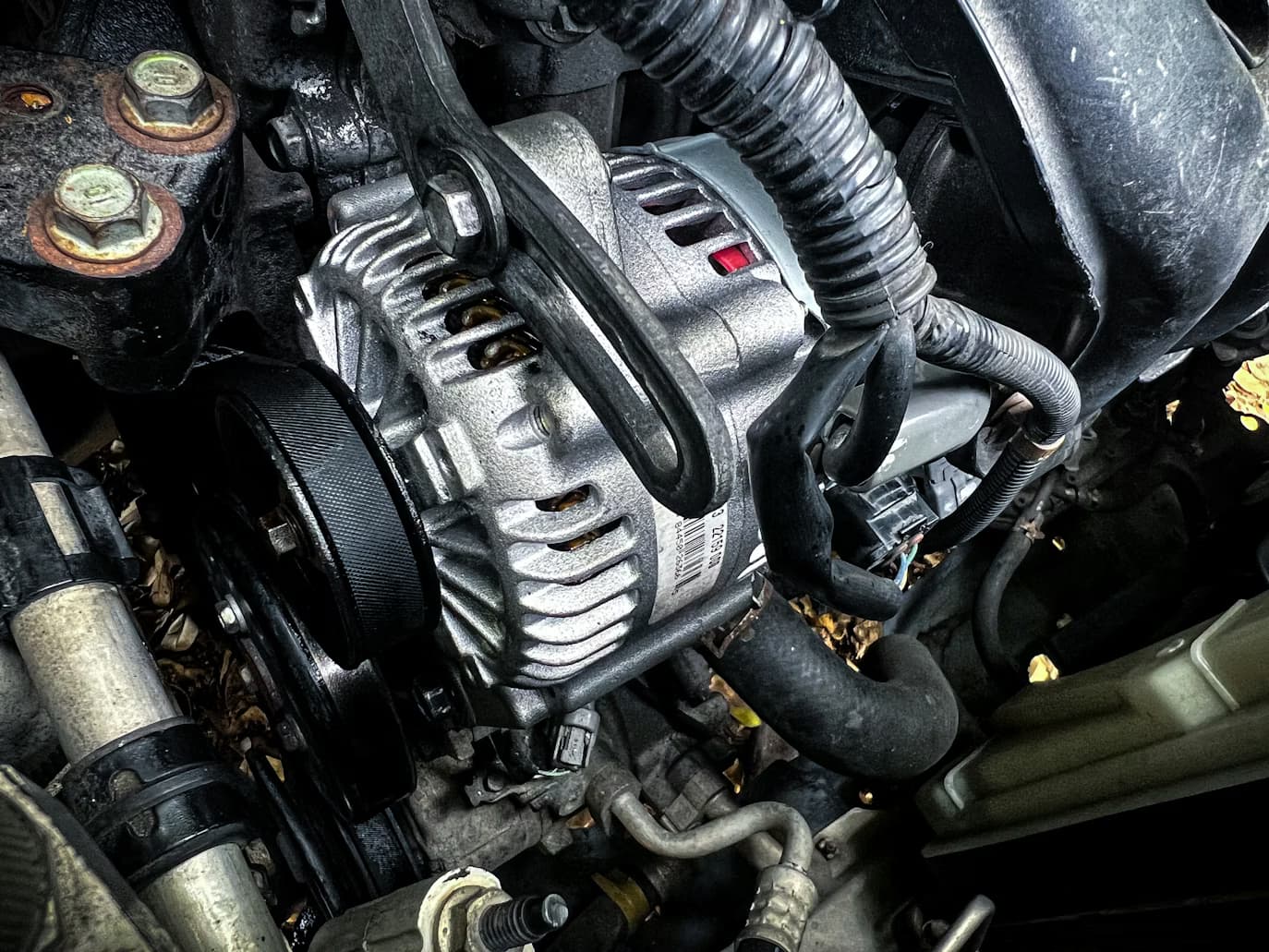
- 05If a jump start works but the car dies again within a day: alternator (it is not recharging the battery).
Five alternator-fail symptoms
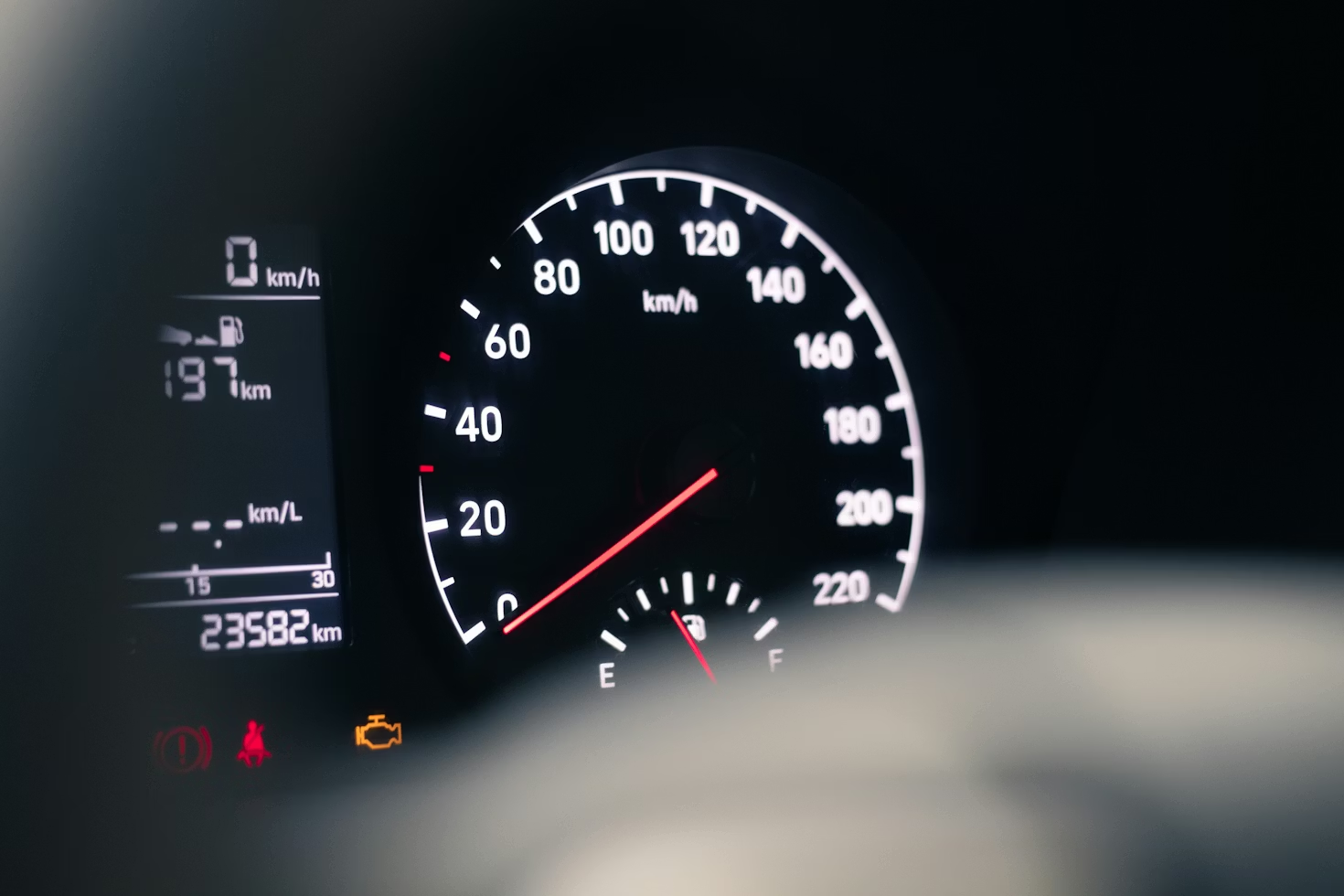
- Battery warning light on the dash while driving
- Headlights dim at idle and brighten when you rev the engine
- Battery dies within hours of being jumped
- Burning rubber smell from the engine bay (slipping serpentine belt)
- Stereo cuts out, gauges flicker, or windows roll up slowly
Five battery-fail symptoms
- Slow crank that has gotten worse over a few weeks
- Battery is more than 3 years old in Texas (4 to 5 elsewhere)
- White or blue corrosion on the battery terminals
- Battery case is swollen or leaking
- Several short trips in cold weather without a long drive in between
Why the parts-store free test misses things
A standalone battery test under load tells you if the battery still holds charge. It cannot tell you whether the alternator is properly recharging the battery while you drive. About a third of the time, a battery that fails the parts-store test is failing because the alternator quit weeks ago and the customer has been running the battery flat over and over.
Texas heat is the real killer
Sustained 100°F+ summers cook batteries from the inside. Three to five years is normal lifespan here, versus five to seven in cooler climates. If your battery is over 3 years old and you have a road trip coming up, replace it preventively. The roadside cost of a midnight tow is a lot more than the cost of a battery.