What TPMS is and why your car has it
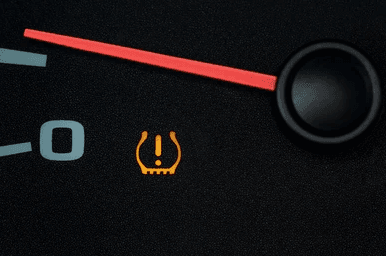
TPMS stands for Tire Pressure Monitoring System. Federal law has required it on all new passenger vehicles sold in the U.S. since September 2007. Each tire has a small sensor inside that reports its pressure to the car's computer. When pressure drops 25 percent below the placard recommendation, the light turns on.
Steady vs. flashing
A steady light means at least one tire is genuinely under-pressure. A flashing light (typically flashes for 60 seconds at startup, then stays solid) means the system itself has a fault, usually a dead sensor or a sensor that has not been programmed after a tire change.
The cold-morning false alarm
Air pressure drops about 1 PSI for every 10°F drop in temperature. After a sudden cold front in DFW (typical in November and February), tires that were properly inflated yesterday afternoon can be 4 to 5 PSI low this morning. Solution: top off your tires once it warms up, drive a few miles, and the light usually clears on its own. If it does not, you have a slow leak.
Real causes worth knowing
- Slow leak from a nail or screw (most common, find it before it gets worse)
- Valve stem leak (rare on modern wheels but possible)
- TPMS sensor battery has died (sensors typically last 7 to 10 years)
- Sensor was damaged during a tire change at a different shop
- Aftermarket wheels installed without TPMS sensors transferred or replaced
What to do, in order
- 01Check all four tires with a gauge (do not trust the dashboard reading alone, it can lag).
- 02Inflate any low tires to the placard pressure (usually printed on the door jamb sticker).
- 03Drive 10 to 15 miles. The light should clear on its own once pressures stabilize.
- 04If the light comes back within a few days: you have a slow leak. Schedule us.
- 05If the light flashes at startup: you need a sensor diagnostic. Schedule us.
Why we do not recommend turning the light off and ignoring it
There are kits and methods online that disable TPMS. We do not recommend any of them. The light exists to warn you about a real safety condition. Underinflated tires generate excess heat, wear unevenly, reduce fuel economy, and increase your risk of a blowout, especially in Texas summer heat. Find the cause, fix the cause, leave the system on.